Step 1: City or county?
Tallahassee's city limits are irregular, and many addresses with a Tallahassee mailing address are actually in unincorporated Leon County. That matters because different offices review projects:
- Inside city limits: the City of Tallahassee's Growth Management department handles building permits and zoning questions.
- Unincorporated Leon County (for example much of Bradfordville and Woodville): Leon County's Development Support and Environmental Management department.
- Other counties: Wakulla, Gadsden and Jefferson counties, the cities of Quincy, Midway, Havana and Monticello, and in Georgia the City of Thomasville and Thomas County each have their own offices.
The Leon County Property Appraiser's website shows whether a parcel is inside the city.
Step 2: Do you need a permit?
For a typical residential fence of normal height, many Florida jurisdictions do not require a building permit, while others do, or require one only above a certain height, for commercial property, in certain overlay areas, or around pools. Instead of guessing, call or check the permitting office for your address, describe the fence (material, height, location on the lot), and ask whether a permit or zoning review is needed. Your contractor usually knows the local answer and often pulls the permit if one is needed.
Want a contractor who knows the local rules?Get a free quote
Step 3: Height and placement
Zoning codes, not building codes, usually set fence height. Common patterns in Florida residential zoning, which you should confirm locally:
- Front yards: lower fences, often around four feet, sometimes with an open design.
- Side and rear yards: taller privacy fences, commonly six feet, sometimes up to eight.
- Corner lots and driveways: fences and hedges must stay low in a "sight triangle" so drivers can see traffic.
- Easements: drainage and utility easements may restrict or forbid fences, or allow them at your own risk if the utility needs access.
- Canopy roads and protected trees: Tallahassee and Leon County protect designated canopy roads and many large trees. Digging near a big oak's roots, or building in a canopy road protection zone, may need review.
Step 4: HOA approval
In many Tallahassee neighborhoods, the HOA's rules are stricter than the city's. Associations commonly regulate height, material, color, which side faces out, and how far forward a fence may come. Get written approval before you schedule. Typical items to submit: a site plan or survey with the fence line drawn in, the style and height, the material and color, and the contractor's quote or product sheet. See our notes on Killearn and SouthWood.
Step 5: Property line
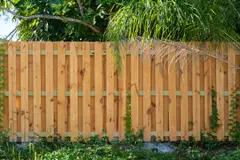
Fences belong on your side of the line. If you do not have a survey with marked corners, consider having the corners located before building on a shared line. Many homeowners set a fence a few inches inside the line. Talking to the neighbor before work starts avoids most disputes, and a shadowbox fence avoids the "good side" argument.
Pool barriers
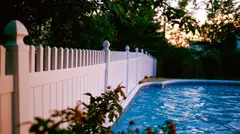
New residential pools in Florida need a barrier under Chapter 515, Florida Statutes and the Florida Building Code: at least four feet high, no climbable gaps, and gates that open outward and self-close and self-latch. Pool fences are inspected. Details: pool fences.
Before anyone digs: Sunshine 811
Before any post hole is dug, Florida law requires a locate request through Sunshine 811 at least two full business days ahead, so buried power, gas, water and cable lines get marked. A good contractor handles this for you; ask to make sure.
Private lines such as irrigation, low-voltage lighting, septic lines and lines to a detached garage are not marked by 811. Point them out to your contractor.
How getting a quote works
- Tell us about the project. Fence type, rough length, timing and ZIP code. It takes about a minute.
- One local contractor gets in touch. We pass your request to one licensed fence contractor who works in your area. Not five companies, not a bidding war on your phone.
- Free on-site measure and written quote. They walk the line, check gates, slopes and trees, and give you a price in writing. You decide if and when to go ahead.
Common questions
Do I need a permit for a 6 foot privacy fence in Tallahassee?
It depends on whether your address is in the city or unincorporated Leon County, your zoning and the location on the lot. Ask the permitting office for your address, or ask your contractor, who often knows the local answer.
How tall can a fence be in my front yard?
Front-yard fences are usually limited to a lower height than back-yard fences, and corner lots have sight-triangle limits. Confirm the exact number with the city or county and your HOA.
Can my HOA stop me from building a fence?
An HOA can set rules on height, style, color and placement under its covenants, and can require approval before you build. Read your covenants and get approval in writing.