
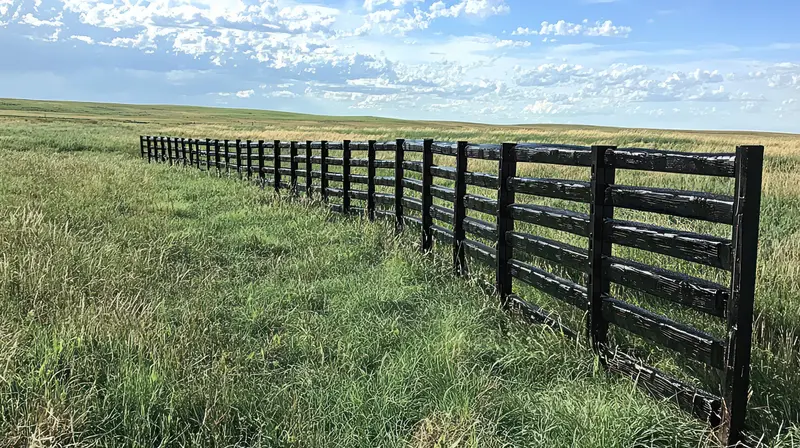
Rural fencing in the Red Hills and the Big Bend
North of Tallahassee, the Red Hills region runs up toward Thomasville, Georgia, with its old plantations, hay fields and horse farms. East toward Monticello and west toward Quincy the land opens into pasture and timber. South in Wakulla County the ground turns sandy and wet. Each of those landscapes changes how posts are set and which fence makes sense.
Common farm and ranch fence types
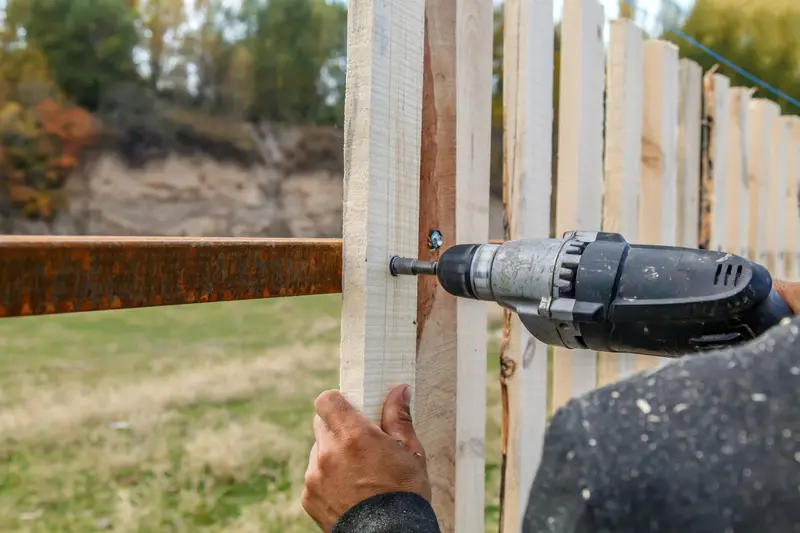
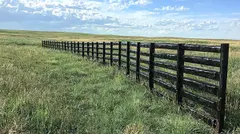
- Board fence: three or four horizontal boards on wood posts, painted black or left natural. The classic horse farm look; also used along driveways on country properties.
- No-climb horse fence: tight woven wire that hooves cannot step through, often topped with a board for visibility.
- Field fence / woven wire: for goats, sheep and general livestock.
- Barbed wire and high-tensile: for cattle on larger pastures, where cost per foot matters most.
- Cross fencing: dividing pasture for rotational grazing.
- Gates: wide tube gates for tractors, hay trucks and trailers. See gates.
Fencing acreage?Get a free quote
Posts, soil and water
Rural fence lines live or die by their corner and brace assemblies. In the red clay north of town, the clay holds posts well but holds water too; in sandy soils south toward Woodville and Crawfordville, posts need depth to stay put. Low spots and creek crossings need their own plan, and so do wetlands, which can carry their own rules. A contractor who walks the full line before quoting will catch these, and it is worth being there for that walk.
Ask what posts are used (treated wood posts rated for ground contact, or steel T-posts between wood braces), how far apart line posts are set, and how corners and gates are braced.
What farm fencing costs
| Fence type | Installed, per linear foot | Good to know |
|---|---|---|
| Chain link (4 ft, galvanized or black coated) | $15–$35 | Cheapest way to enclose a big yard |
| Farm & ranch (board or wire) | $15–$35 | Long runs bring the per-foot price down |
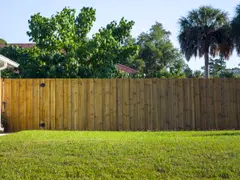
| Wood privacy (6 ft pressure-treated pine) | $22–$45 | Shadowbox and board-on-board cost more |
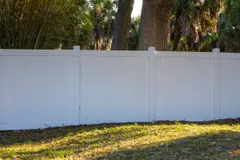
| Vinyl privacy (6 ft) | $35–$60 | Higher up front, little upkeep |
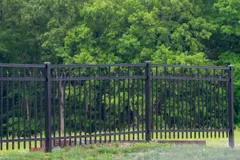
| Aluminum (4–5 ft ornamental) | $35–$75 | Pool-code styles and heavier rails cost more |
Typical installed ranges reported by national cost guides such as Angi. Gates, removal of an old fence, slopes, rock or roots and permit fees come on top. The written quote from your contractor is the number that counts.
Rural fencing is priced by the length of the line, the type of fence and the terrain. Wire fence on open, flat ground is the least per foot; board fence and no-climb horse fence cost more. Clearing brush along an old fence line and removing old wire add to the job. Because runs are long, getting the layout right with your contractor on site saves more money than anything else.
Agricultural land and rules
Fencing on agricultural land is often treated differently from fencing in a subdivision, but rules depend on the county and the zoning. Properties in Leon, Gadsden, Jefferson and Wakulla counties and in Thomas County, Georgia each have their own offices. If your property is in a platted subdivision with covenants, those apply too. The permit guide covers how to check.
Before any post hole is dug, Florida law requires a locate request through Sunshine 811 at least two full business days ahead, so buried power, gas, water and cable lines get marked. A good contractor handles this for you; ask to make sure.
How getting a quote works
- Tell us about the project. Fence type, rough length, timing and ZIP code. It takes about a minute.
- One local contractor gets in touch. We pass your request to one licensed fence contractor who works in your area. Not five companies, not a bidding war on your phone.
- Free on-site measure and written quote. They walk the line, check gates, slopes and trees, and give you a price in writing. You decide if and when to go ahead.
Rural areas we cover include Monticello, Quincy, Havana, Thomasville, GA and Woodville.
Common questions
What is the best fence for horses?
Many horse owners use board fence or no-climb woven wire, often combined. Barbed wire is generally avoided for horses. A contractor experienced with equine fencing can recommend heights and spacing.
Do I need a permit for farm fencing?
It depends on the county and how your land is zoned. Agricultural properties are often handled differently from subdivision lots, but check with the county before you build.
Can you remove an old fence line first?
Many contractors can remove old wire and posts and clear the line as part of the job. Mention it in your request so it is in the quote.